
Put the standard to work, on every shift and in every project.
Daily checklists with proof the work got done, and projects that carry a change through to the end.
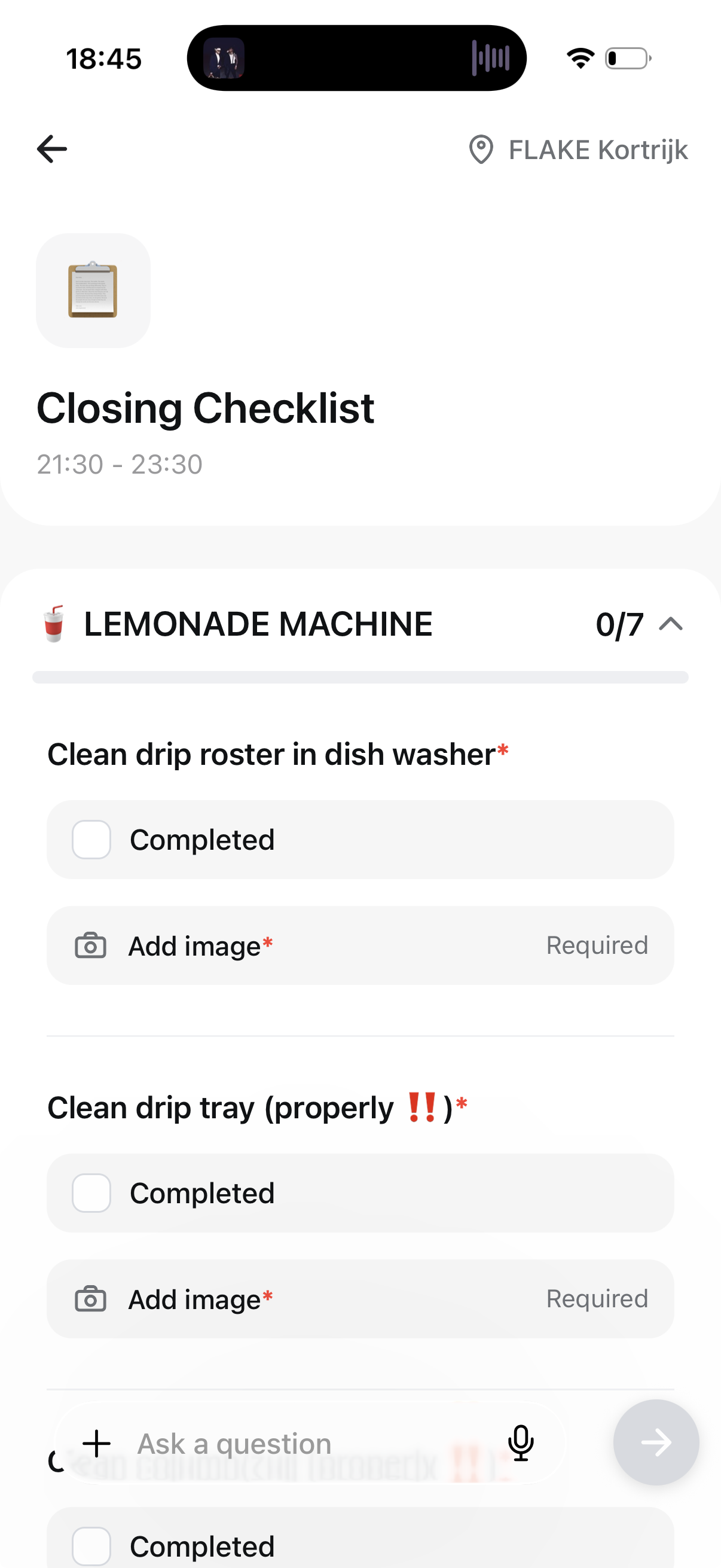
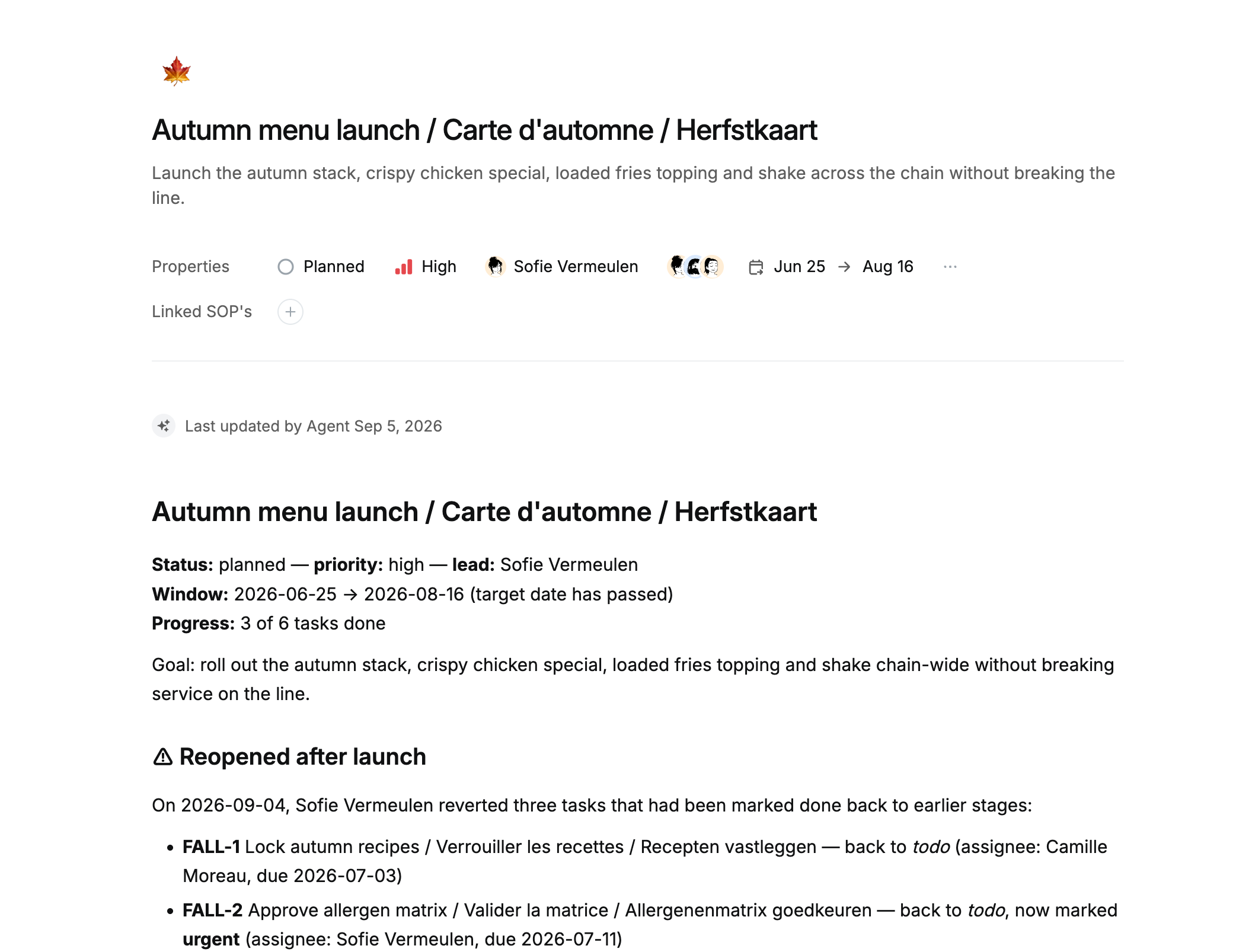
From the list to the proof it happened.
Write the list once
Opening, closing, temperature logs. Built from your procedures, scheduled per location, down to the time of day.
It shows up on the right shift
Whoever is rostered at that location sees that day’s checks on their phone. Nothing to hand out, nothing to laminate.
Done on the floor, with proof
A tick, a temperature, a photo. Captured where the work happens, timestamped, not signed off from the office.
Kimchi looks at the photo
Write what good looks like once: every tray full to the front, cards in place. Kimchi reads each counter photo against that. A tray down to the last few is flagged with the reason, and the manager hears about it in a minute.
Every location at a glance
Who ran their checks, who skipped, and what was flagged, across the whole estate on one screen. You read the two exceptions instead of four hundred photos.
Why the checklists hold up.
On the shift, not in a binder.
The list arrives on the phone of whoever is rostered that day.
Proof, not a signature.
A photo and a reading taken where the work happened, with the time on it.
Read before anyone has to look.
A reading out of range or a photo that does not match is flagged with the reason why, so a manager reads the exceptions rather than the pile.
Ready for the audit.
Months of evidence already gathered, per location, without anyone chasing it.
Project management built for hospitality teams.
Plan an opening, a menu launch or an audit with Kimchi. When the project is finished, it becomes procedures and a template you start the next one from.
Describe the work, Kimchi drafts the plan
An opening, a menu launch, an audit. Say what it is, add the documents you already have, and Kimchi proposes the tasks and their subtasks. Nothing is created until you confirm it.
Every task has a name, date and owner
Each task carries an owner, a due date, a priority and a status. Blocked is a status you can see, not a surprise you find out about.
Questions go on the task
Comments and updates live on the task they are about, with the activity under them. The question about the supplier is answered where the task is, not in a group chat.
Watch it land
Every project on one list with its locations, its target date and how far along it is. A halfway check is a glance, not a status meeting.
When a project is done, Kimchi writes the procedures
Kimchi turns the finished tasks into SOPs, one per department, and saves the plan as a template. Next time, you start from what worked.